

Expertise
Education
Medical School: University of Nairobi, College of Health Sciences
Residency: University of Texas, Health Science Center
Fellowship: The Parkinson's Disease Research, Education, and Clinical Center
Boards: American Board of Psychiatry and Neurology, American Board of Psychiatry and Neurology Sleep Medicine
Dr. Eisa specializes in Movement Disorders, Sleep Medicine and Neuro-Ophthalmology and is board certified in Neurology and Sleep Medicine. He has been practicing Medicine since 1981 and has a special interest in Neurodegenerative disorders like Parkinson’s Disease, Chemo-denervation botox injections for dystonia, and related disorders.
He served as an Assistant Professor of Neurology and Director of the Movement Disorder Center at Yale University School of Medicine. He was a Special Fellow in Movement disorders at The Parkinson’s Disease Research, Education and Clinical Center (PADRECC) at the University of Pennsylvania VA Medical Center. Dr. Eisa also serves as an Associate Professor at the Medical College of Georgia and Neurology Clerkship Director of the South West Campus. He is a Fellow of the American Academy of Sleep Medicine which is The leading voice in the sleep field that sets standards which promote excellence in sleep medicine health care, education, and research. He also received his Master of Medicine in Ophthalmology. He has received several awards for excellence in teaching medical students and neurology residents.
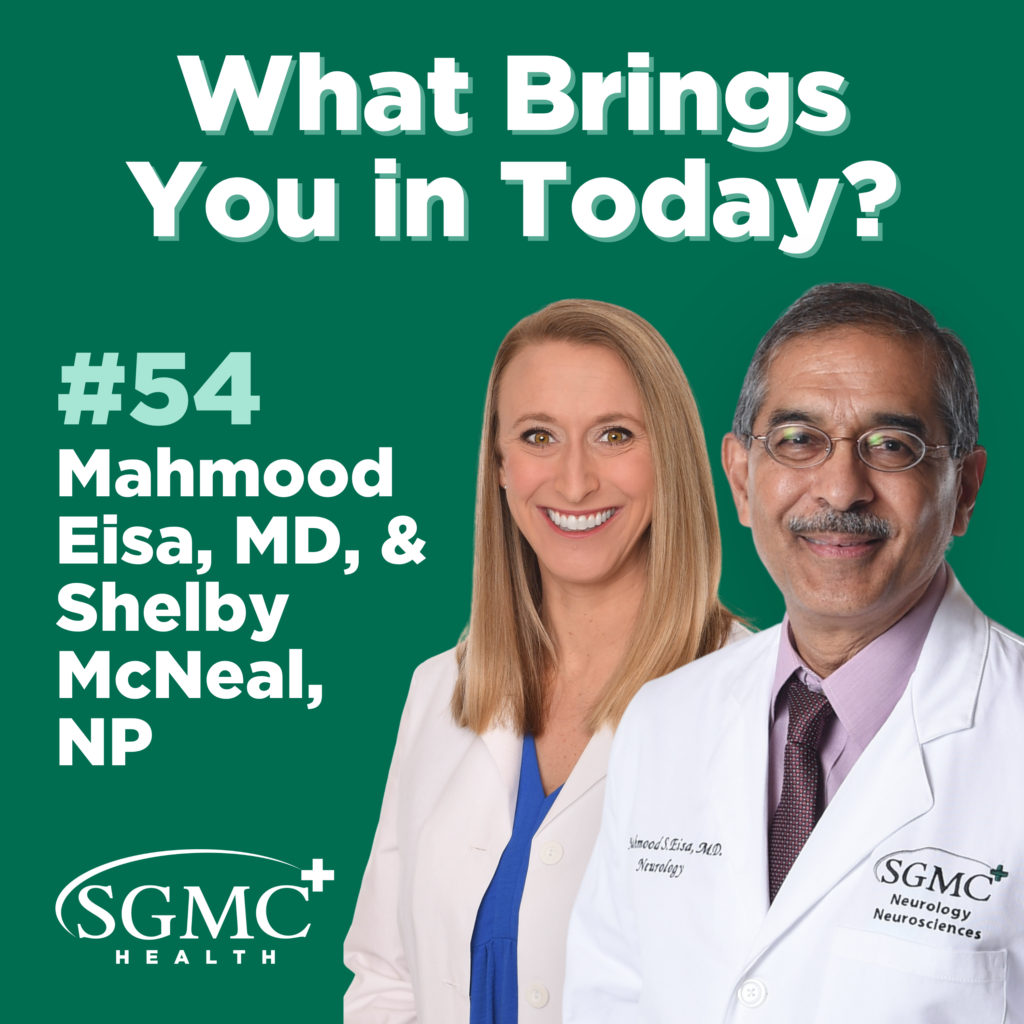
If sleep feels like a mystery, this episode is your wake‑up call. In this episode of SGMC Health’s “What Brings You in Today?” podcast, Mahmood Eisa, MD, and Shelby McNeal, NP, from SGMC Neurology take a deep dive into what good sleep really looks like—how much you need, what healthy sleep habits are, and practical tips to finally get a good night’s rest. They also break down sleep study options, from at‑home testing to in‑lab studies, and explain why quality sleep plays a critical role in overall health and daily function. Plus, don’t miss the conversation on a groundbreaking dementia treatment now offered at SGMC Neurology—infusion therapy—and why early detection can make all the difference.